



Kliniker med flerårig erfarenhet
Erfarna läkare och modern teknologi
Vi använder toppmodern utrustning och de senaste teknikerna för att säkerställa högkvalitativa, precisa behandlingar. Nedan kan du läsa mer om FUE- och FUT-metoderna.
Anpassad behandling & personlig uppföljning
Våra behandlingar är skräddarsydda efter dina behov för att uppnå ett naturligt utseende. Vi tillhandahåller grundlig uppföljning före, under och efter din hårtransplantation.


Nöjda kunder
Vår prioritet är att säkerställa att våra kunder uppnår fantastiska resultat och känner sig självsäkra med sitt nya hår.
Läkare med omfattande erfarenhet
Alla vår läkare har specialiserad expertis inom hårtransplantationer och använder de senaste teknikerna för att leverera optimala resultat.
Hur mycket kostar en hårtransplantation?
Kostnaden för en hårtransplantation beror på din utgångspunkt och ditt önskade resultat. Den slutliga kostnaden kommer att bestämmas under din konsultation. Priserna börjar på 80 000 SEK per session. Svenska medborgare har möjlighet att finansiera proceduren i upp till 5 år genom Svea Finans.
Boka en konsultation med oss. Vi kommer att bedöma orsaken till ditt håravfall och presentera dina alternativ, vilket gör att du kan fatta ett välgrundat beslut.

Vad är en hårtransplantation?
Håravfall är en naturlig del av livet. I vissa fall är det tillfälligt, medan det i andra fall är permanent. Många individer väljer att vidta åtgärder mot håravfall. Hårtransplantation är en kosmetisk procedur som används för att återställa hårväxt. Våra behandlingar innebär att man transplanterar friska hårsäckar från ett område till ett annat. Vi erbjuder två av de mest erkända teknikerna för hårtransplantationer: Follicular Unit Excision (FUE) och Follicular Unit Transplantation (FUT). Dessa metoder säkerställer naturliga resultat med snabb återhämtning. Det slutliga resultatet är vanligtvis synligt 12 månader efter operationen.
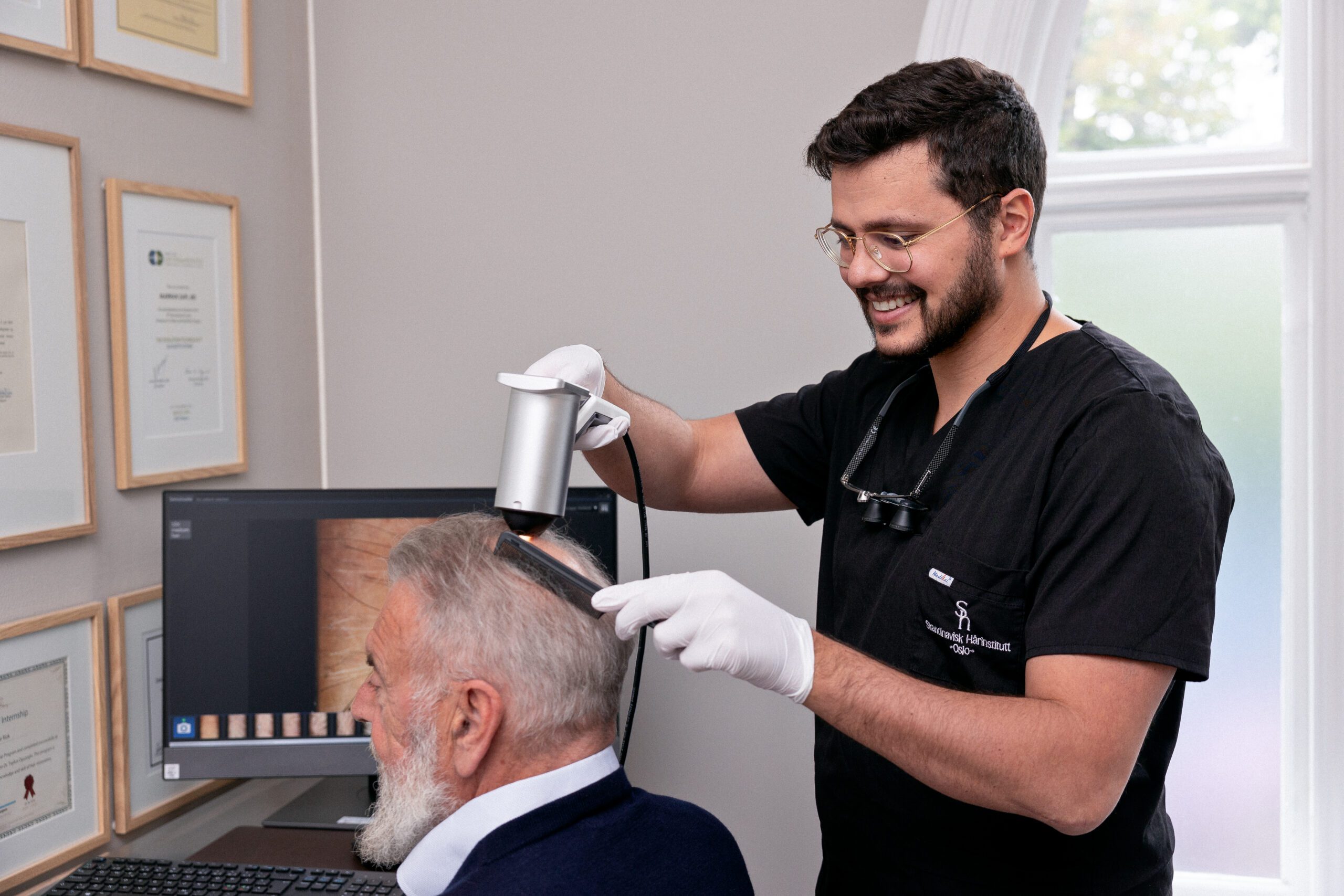
Moderna metoder för hårtransplantation
Det finns flera sätt att utföra en hårtransplantation. Vi använder de mest avancerade och effektiva teknikerna: FUE och FUT.
Processen på våra anslutna kliniker: hårtransplantation steg för steg
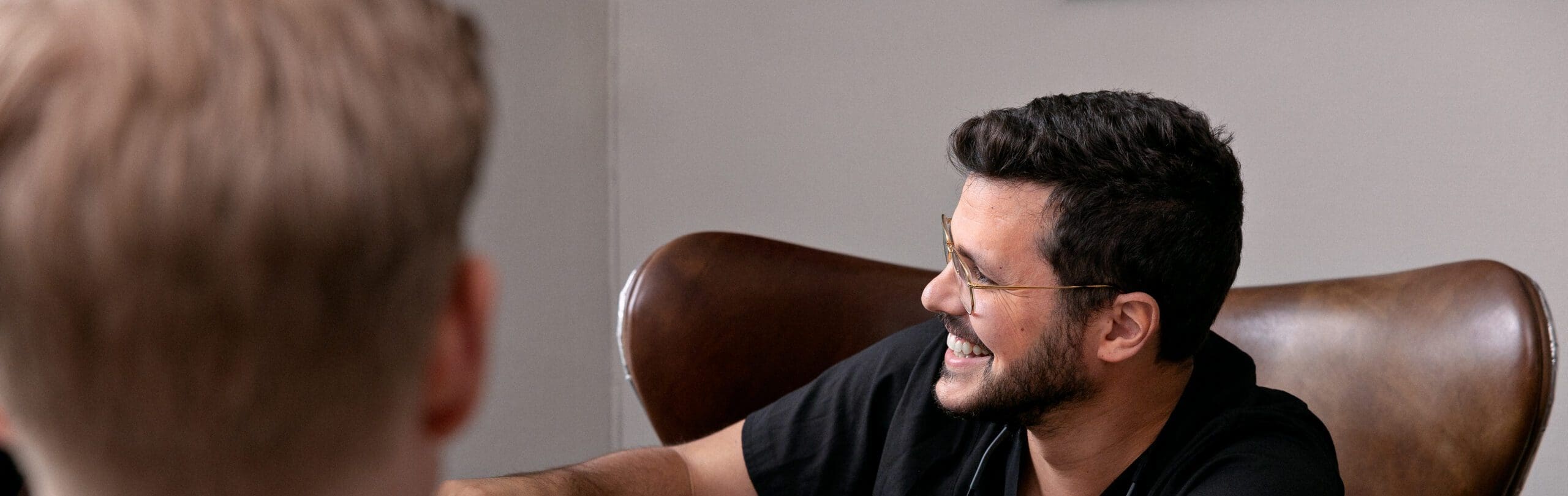
1. Konsultation
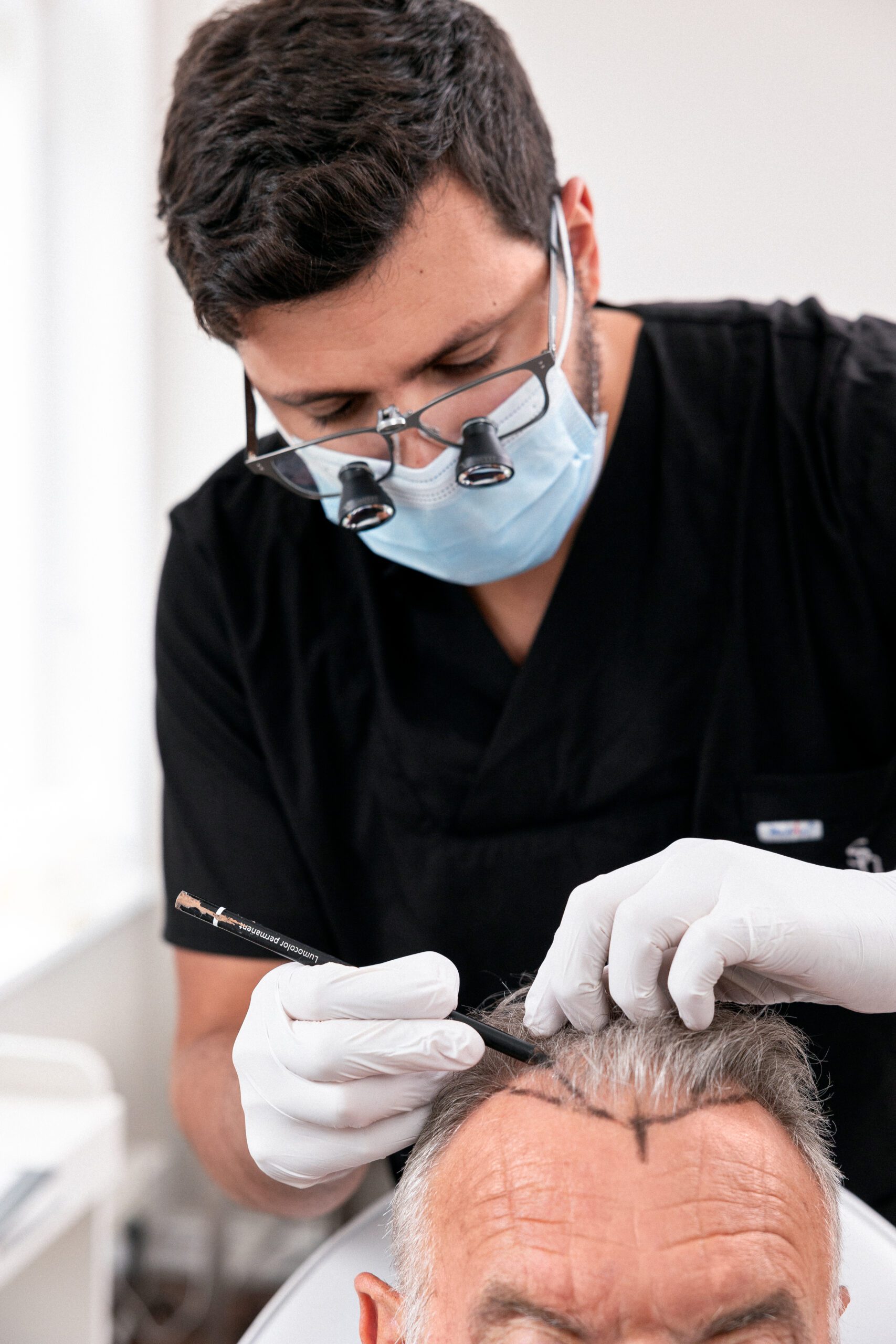
Det första steget i processen är en konsultation där vi bedömer ditt håravfall och utforskar möjliga behandlingsalternativ. Denna konsultation kan äga rum personligen på vår klinik eller via video. Under diskussionen kommer du att få detaljerad information om de behandlingsmetoder vi erbjuder, och vi kommer att bestämma den bästa lösningen för dig baserat på dina behov och preferenser.
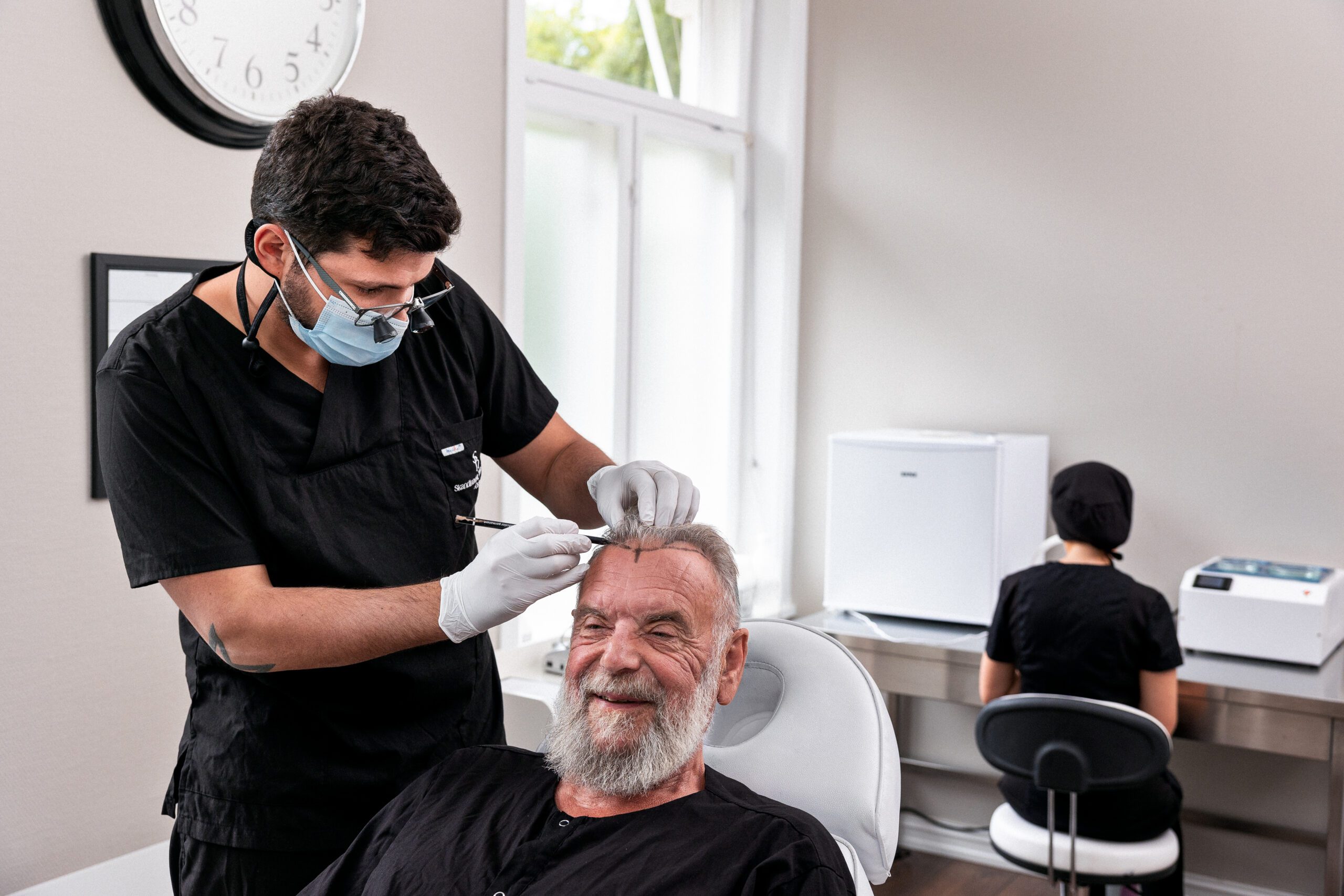
2. Behandlingsdag: Förberedelser före transplantation
Om du går vidare med behandlingen kommer du att anlända till vår klinik vid den överenskomna tiden på dagen för din behandling. Innan proceduren börjar kommer läkaren att gå igenom hela behandlingsplanen med dig och förklara vad du kan förvänta dig. Du kommer också att ha möjlighet att ställa frågor och säkerställa att du känner dig bekväm innan proceduren startar.
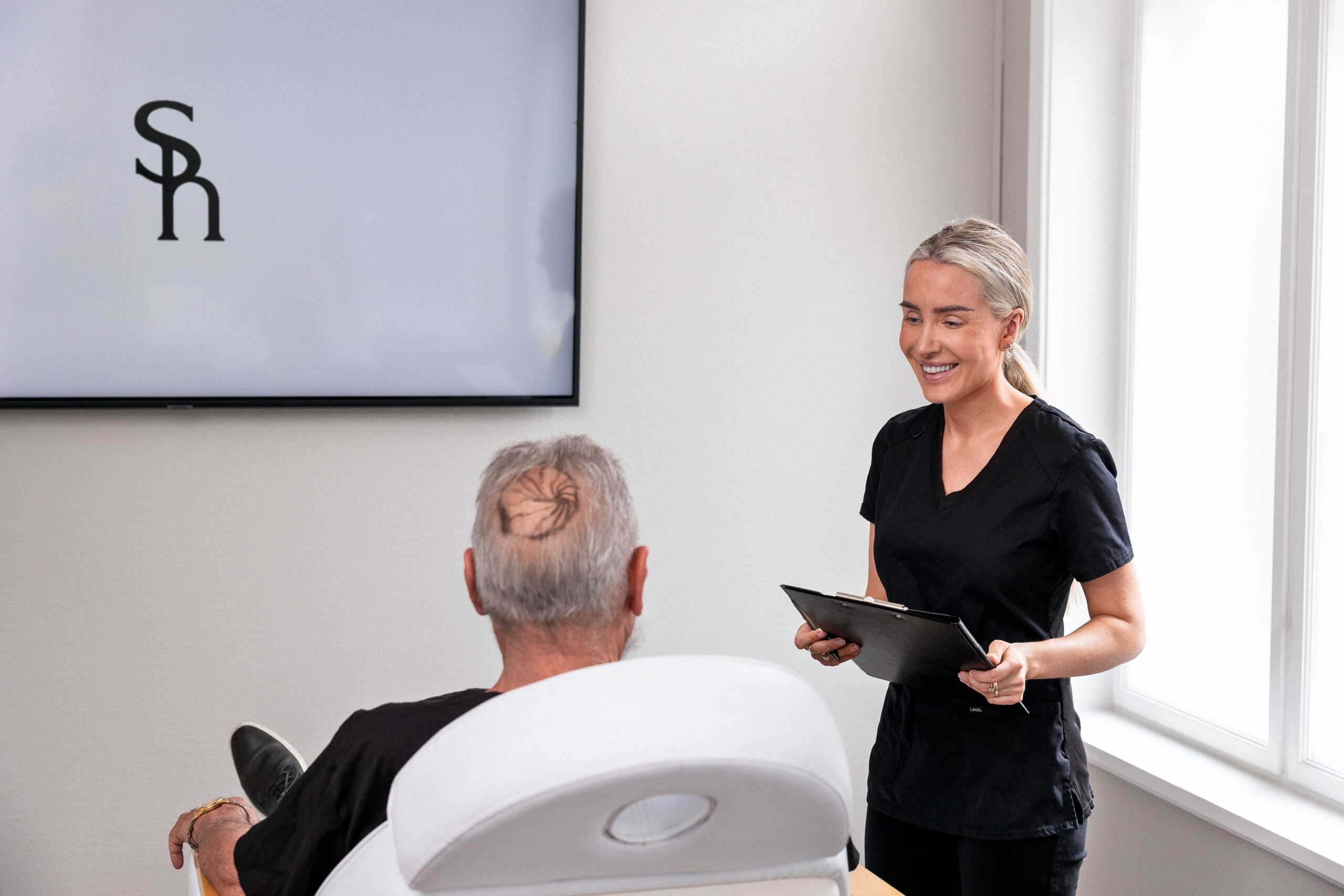
3. Behandlingsdag: Under transplantationen
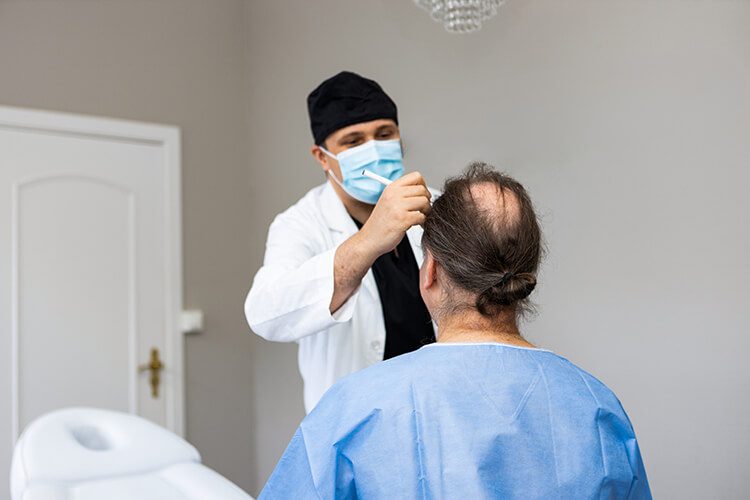
Hårtransplantationsproceduren börjar när du har fått lokalbedövning. Läkaren utför behandlingen med avancerade tekniker som FUE eller FUT, beroende på vad ni kommit överens om under din konsultation. Proceduren varar vanligtvis mellan 2 och 10 timmar, beroende på omfattningen av transplantationen.
4. Behandlingsdag: Vård efter transplantation
Efter proceduren kommer du att få en sammanfattning av hur transplantationen gått och vad som gjordes. Du kommer också att få detaljerade instruktioner om hur du ska vårda ditt hår under de kommande dagarna.

5. Återhämtning och uppföljning
De första dagarna efter transplantationen är avgörande för att få optimala resultat. Du kommer att få omfattande vägledning om hur du ska tvätta ditt hår, bästa sovställningar och vilka aktiviteter du bör undvika, inklusive arbete och träning. Under de följande veckorna kan en del eller allt det transplanterade håret falla av, eftersom hårsäckarna går in i en vilofas. Hårväxten börjar vanligtvis omkring tre till fyra månader efter transplantationen. Fullständiga resultat kan förväntas efter cirka 12 månader. Våra läkare kommer att följa upp med dig efter proceduren och finnas tillgängliga för att svara på eventuella frågor. Du kommer också att ha ett uppföljningsmöte för att säkerställa att allt fortskrider som planerat och för att utvärdera dina resultat.
Välkommen till en konsultation

På vår klinik prioriterar vi att säkerställa att våra patienter har all information de behöver innan de överväger en hårtransplantation. Därför börjar varje behandling med en konsultation. Under din konsultation kommer vi att undersöka din hårbotten och ta upp eventuella frågor du kan ha. Vi är alltid transparenta om huruvida du är en lämplig kandidat för en hårtransplantation och vilken behandlingsmetod som kommer att vara mest effektiv för dig.
Konsultation med Dr. Emil George (45-60 min)
Vanliga frågor om hårtransplantation
During the consultation, we assess the cause of your hair loss and determine which treatment may be suitable for you.
This is your opportunity to share the results you hope to achieve. We always provide honest information and advice. If a hair transplant is not the right option for you, we will explore alternative treatments that may be a better fit.
We use the most modern and advanced hair transplant methods available today: FUE and FUT. Both techniques involve extracting hair from a donor area, usually at the back of the head, and transplanting it to areas with thinning hair. The procedure is performed under local anesthesia, making it painless.
The duration of a hair transplant varies depending on the number of hairs being transplanted and the complexity of the procedure. Typically, it takes between 2 to 10 hours.
Many clinics claim to perform hair transplants without any scarring, but this is not possible. At our affiliate clinics, we believe in being honest about this. However, the scars are very small and will be concealed by your natural hair as it grows back.
For the first few weeks after the procedure, it’s important to take it easy. Light activities like walking are fine, but avoid intense exercise. For the first four weeks, you should not swim, sunbathe, or use a sauna to prevent infection and ensure proper healing in the treated area. You will receive detailed post-treatment instructions to help you care for the transplanted area and achieve the best possible results.
The time you need off work depends on your job. If you have a sedentary office job, you may only need a couple of days off. For physically demanding jobs, a longer recovery period may be necessary.
In the first few days after the procedure, you may experience some itching and numbness in the transplanted areas of the scalp.
Mild swelling can also occur but usually subsides within 2–6 days. You can always contact us if you have any questions or concerns after the procedure.
Certain factors may make you unsuitable for a hair transplant. For example, you may be too young, or you may not have enough donor hair available to transfer from one area to another. A consultation with our experts will help determine if a hair transplant is the right option for you.
Yes, we offer corrective treatments for patients who have previously undergone a hair transplant. During a consultation, we will assess your situation and develop a customized treatment plan to help you achieve the best possible results.
Vanliga frågor om håravfall
There are many potential reasons for hair loss, but in most cases, it is due to androgenic alopecia. This condition, commonly known as male pattern baldness, is caused by genetics and aging and affects a large percentage of men.
Other possible causes of hair loss include autoimmune diseases such as alopecia areata, poor diet, high stress levels, eating disorders, or anemia.
If you're unsure whether a hair transplant is the right solution for you, book a consultation with us to explore your options.
If you are experiencing excessive hair loss, it may be time to seek professional help. It is normal to lose between 100 to 150 hairs per day, but if you notice significantly more shedding, a consultation with a specialist may be beneficial. At Scandinavian Hair Institute, we can help identify the cause of your hair loss and explore possible treatment options tailored to your needs.
Hair loss in women can be caused by a variety of factors, including aging, medications, stress, and nutritional deficiencies. Many women experience temporary hair loss, known as telogen effluvium, which occurs suddenly and typically resolves on its own. Common triggers for temporary hair loss:
- Childbirth
- Illness or medications
- Strict diets
- Nutritional deficiencies
- Stress
Some women also experience chronic hair loss, which can be caused by androgenetic alopecia—a condition that affects women differently than men, often resulting in diffuse thinning rather than receding hairlines. Another cause of long-term hair loss is chronic telogen effluvium, which leads to gradual thinning across the entire scalp. While the hair often grows back, it may appear thinner than before. This condition is often linked to prolonged stress, hormonal imbalances, or nutritional deficiencies.
Alopecia areata is an autoimmune disease in which the body's immune system mistakenly attacks hair follicles, causing patchy hair loss. The severity of the condition varies - from small, round, or oval bald patches on the scalp to more extensive hair loss. In some cases, alopecia areata can progress to: Alopecia totalis - complete hair loss on the scalp or Alopecia universalis - total hair loss across the entire body, including eyebrows and eyelashes.
Yes, hair loss with age is common in both men and women. For women, it often occurs during menopause, as levels of estrogen and progesterone decline. These hormones play a role in hair growth, and their decrease can lead to thinning hair or increased shedding. At the same time, androgen (male hormone) levels may become more dominant, which can further contribute to hair loss. This hormonal shift can result in diffuse thinning rather than bald patches, commonly seen in androgenetic alopecia.
It is rare to experience significant hair loss during pregnancy - many women actually notice that their hair becomes thicker.
This is because hormonal changes prolong the hair's growth phase, preventing normal shedding. However, about three months after giving birth, hormone levels shift, and the hair enters a resting phase, which can lead to increased hair shedding. Many women experience what is commonly referred to as "nursing hair loss." This is completely normal and temporary - hair typically regrows within 6 to 12 months.